Demographics for Fertility in UAE
UAE citizen birth rate drops 13.5% as total population births continue to rise (Source: Gulf news, December 2025)
Official statistics released by the Ministry of Health and Prevention show a significant decline in the number of births among Emirati citizens over the past decade, prompting concern about the long term demographic and social implications.
Data obtained indicate that the number of births to UAE citizens fell by 13.55 per cent between 2014 and 2023, from 34,618 in 2014 to 29,926 in 2023.
During the same period, total births in the UAE, including citizens and expatriates, rose by 5.45 per cent, from 95,860 in 2014 to 101,088 in 2023.
A report prepared by the Federal National Council’s Health and Environment Committee identified 12 challenges to raising birth rates among citizens, spanning both health and social factors, and proposed six recommendations to increase fertility and the number of births.
Reasons for Declining Fertility
- Delayed Marriage: The parliamentary report noted a rise in the average age at marriage for Emirati citizens, with men marrying later, increasing from 30 years and six months in 2018 to 32 years and seven months in 2022, and women from 26 years and four months to 28 years and nine months over the same period. It also revealed a decline in the total fertility rate among citizens, from 3.2 children per woman in 2021 to 2.9 children per woman in 2023.
- Health Concerns: The parliamentary report highlighted a series of health challenges that may be contributing to lower fertility, including chronic conditions linked to obesity, diabetes, high blood pressure and hormonal disorders, and a high prevalence of sedentary lifestyles. The committee noted that 27 per cent of the population is obese and 70 per cent report low levels of physical activity, factors known to adversely affect reproductive health.
- Social trends also feature in the report’s analysis, including increased consumption of processed foods, widespread vitamin D deficiency associated with limited sun exposure, and lifestyle patterns that contribute to hormonal imbalance. The report additionally observed shifting perceptions of body image and an increase in elective weight loss procedures, which may affect women’s reproductive health.
- Social & Economic Factors: Lawmakers also pointed to later marriage as a key factor, with some young citizens postponing marriage until after 40 years of age due to career goals, financial considerations and concerns about the cost of raising children.
In response to the demographic trends, the Health and Environment Committee recommended a range of measures, including stricter oversight of fertility treatment centers, enhanced public awareness campaigns on the importance of family and child rearing, support for earlier marriage, and coordinated action with health, education, religious and media institutions to promote family formation.
Addressing these issues, Sana bint Mohammed Suhail, Minister of Family, described fertility and reproductive health as a national priority. She said a comprehensive national fertility policy is under development, built on analysis of more than 60 existing policies and initiatives affecting fertility, including workplace policies, family support programmes and efforts to balance professional and family life.
Data from another source is also alarming:
The United Arab Emirates’ total fertility rate has decreased significantly, reaching to almost 1.2–1.34 births per woman in 2024–2025, one of the lowest in the Arab world countries. While the national average is low due to a large expatriate population, the fertility rate for Emirati women is higher, declining from 3.7 (2015) to 3.1, according to data from Federal competitiveness and statistics center (FCSC).
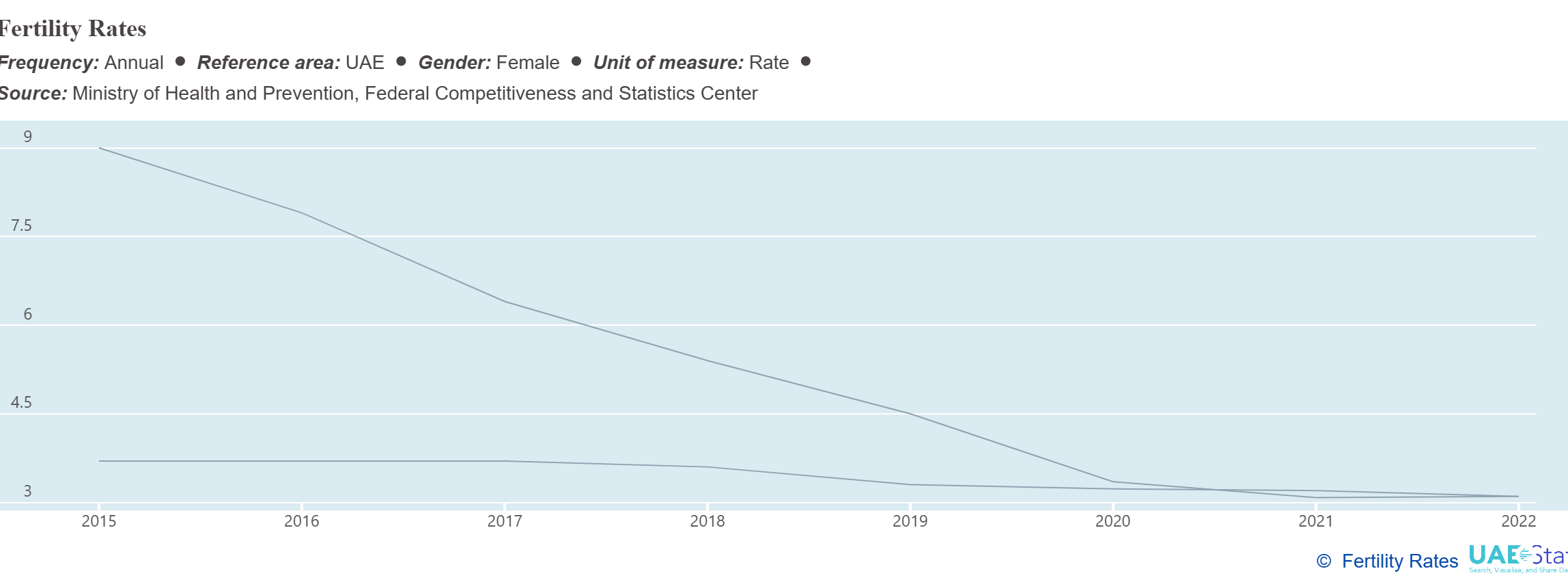
Image taken from FCSC

Macrotrends
Key Fertility Statistics in the UAE (shared by
- Total Fertility Rate (2025): 1.34 children per woman.
- Emirati Fertility Rate (2022): 3.1 children per woman.
- Birth Rate (2025): 9.69 per 1,000 people.
- Long-term Trend: A sharp decline from 6.97 in 1960 to 1.15 by 2022.
- Infertility Rates: Approximately 1 in 6 couples in the UAE experience difficulties conceiving, with the IVF market growing, according to studies published in FCSC.
Sources: UAE citizen birth rate drops 13.5% as total population births continue to rise

 Give Us a Call :