These tests show up the fertility potential or the number of remaining eggs number in the ovary.
These tests include:
- Amh (anti-müllerian hormone) test: This measures the level of amh in the blood, which reflects the number of small follicles in the ovaries. High levels of amh indicate a larger ovarian reserve, while low levels suggest that fewer eggs are left in the ovary.
- Antral follicle count: This is an ultrasound-based test that counts the number of small follicles in each ovary. A higher number of follicles implies a larger ovarian reserve.
It is important to note that ovarian reserve can vary widely among women, and a low ovarian reserve does not necessarily mean that a woman cannot conceive. However, it can make it more difficult to become pregnant with poor ovarian reserve, and fertility treatments such as ivf may be less successful.
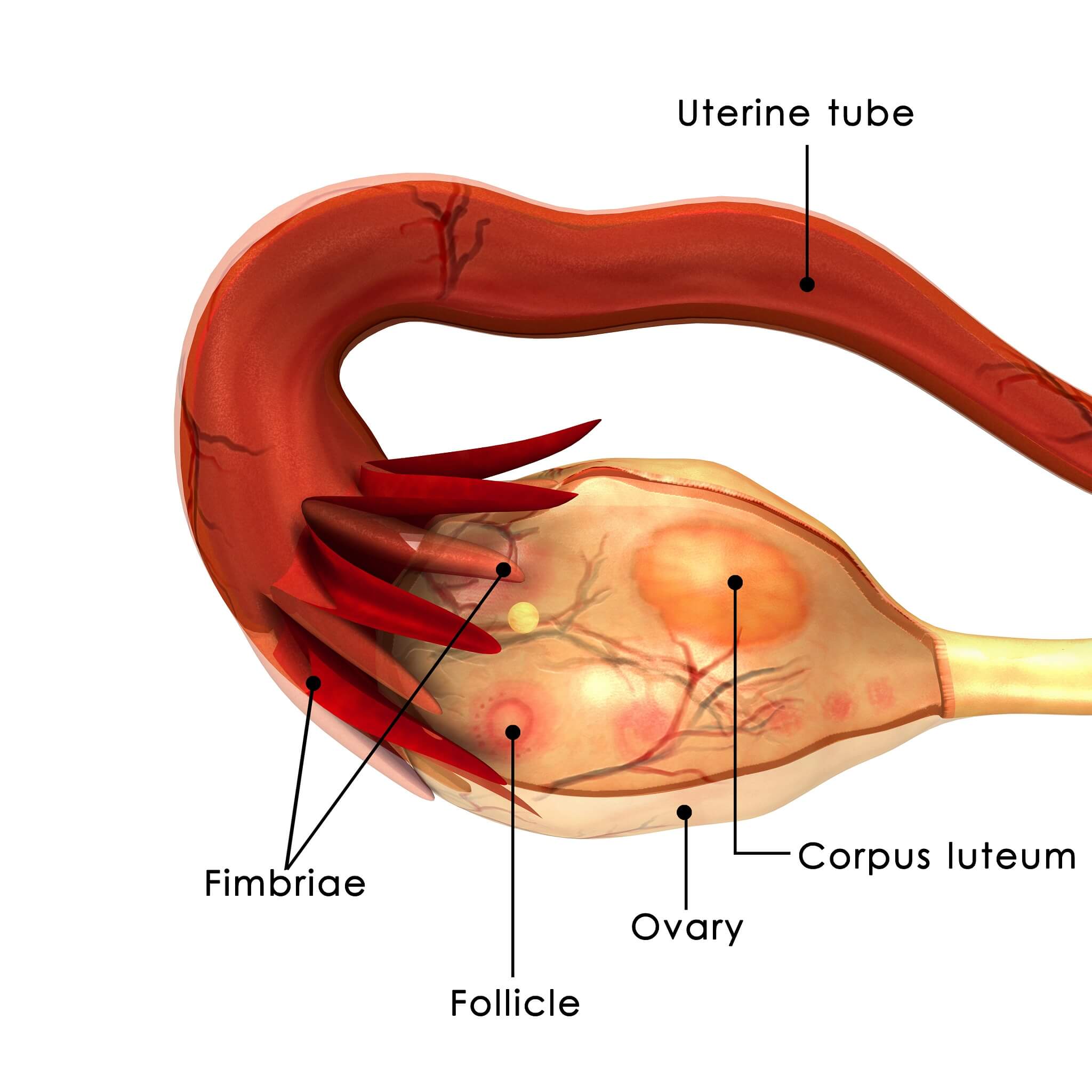
There is no fool proof test till now to predict the occurrence of ovulation. LH detection kit(ovulation kits),tracking basal body temperature, cervical mucus changes, serum Progesterone and ultrasound can help predict ovulation. However, ultrasound and serum Progesterone are considered more sensitive in amongst these tests.
Semen analysis: Normal parameters for the semen analysis are
- Volume: The volume of ejaculate should be between 1.5-5 ml.
- Concentration: The sperm concentration should be at least 15 million per ml.
- Motility: At least 40% of the sperm should be motile and 32% should be rapidly progressive.
- Morphology: The shape of the sperm should be normal, with at least 4% having a normal shape.
- Viability: At least 58% of the sperm should be alive.
Abnormalities in any of these parameters can affect male fertility. If the semen analysis shows abnormal results, In order to determine the root of the issue, more tests are required. These examinations could involve an examination of the reproductive system physically, hormone testing, genetic testing in Abu Dhabi, and Scrotum ultrasounds. Changing one’s lifestyle, taking medicine, or having surgery are all possible treatments.

This examination counts the number of sperms that have DNA fragments, which can have an impact on fertilisation and embryo development.
SDIA/SCSA is a useful tool for assessing male fertility potential and recognising the possible causes of male infertility. It can also be used to evaluate the impact of various factors such as smoking, age, exposure to toxins, and infections on sperm DNA integrity.
The results of the SDIA/SCSA test can be used to guide treatment decisions, such as selecting the most appropriate assisted reproductive technologies (ART) or recommending lifestyle changes to improve sperm health.It provides useful information on sperm DNA integrity that cannot be obtained from a traditional semen analysis, allowing individualized and effective treatment options.

- Ultrasound: High-frequency sound waves are employed in this non-invasive diagnostic procedure to provide images of the interior components of the female reproductive system. TVS is useful in assessing ovulation, numbers of ovarian follicles and measure their size. It can also be used to monitor the growth of ovarian follicles during fertility treatment cycles.TVS can also be used to assess the thickness and quality of the endometrium (the lining of the uterus) and detect anyabnormalities that may be affecting fertility. This includes uterine fibroids, polyps, and adhesions.
Hysterosalpingogram (HSG):
This is a traditional method of evaluating uterine cavity and fallopian tubes. It can detect abnormalities such as polyps, fibroids, and adhesions that may interfere with implantation or pregnancy. Additionally, an HSG can determine if the fallopian tubes are patent (open) or obstructed, which is essential for conception to occur.
Other advantages of HSG include its low cost compared to laparoscopy. HSG is usually performed on an outpatient basis and involves minimal discomfort. It takes less than an hour to complete, and patients can resume regular activities soon after the procedure.
However, there are some disadvantages to HSG. Firstly, for some women, especially those with pre-existing conditions like endometriosis or pelvic inflammatory disease, it hurts worse. Second, although the radiation exposure is typically regarded as low and safe, HSG does expose patients to radiation. Last but not least, false-positive or false-negative results from HSG are possible because it is not always accurate in detecting tubal abnormalities.
Overall, HSG remains an essential tool in the evaluation of infertility, and its advantages outweigh its disadvantages. Its capacity to offer crucial details regarding the fallopian tube and the endometrial cavity tubes makes it a valuable diagnostic tool for infertility specialists.
HyCoSy/HyFoSy-Hysterosalpingo-contrast-sonography:
It is a small procedure to check the patency of fallopian tubes by using special dye and ultrasound hence avoiding radiation by Xray used in traditional hysterosalpingogram.
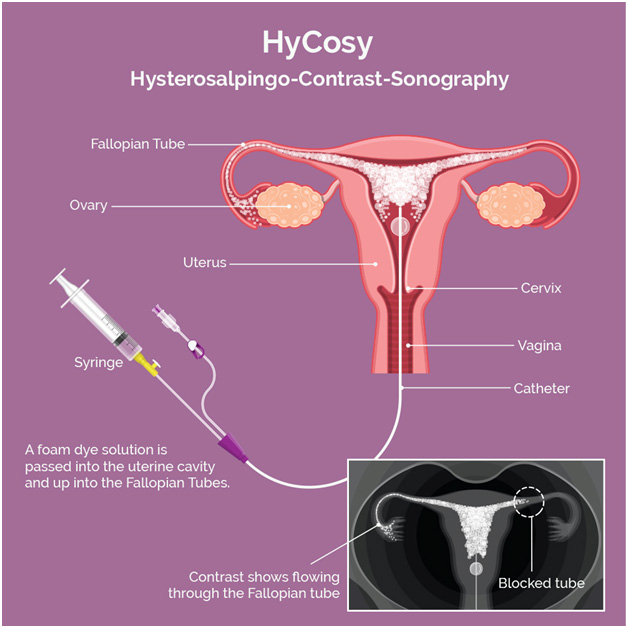

Left side 1st image shows the scan picture of fallopian tube before injecting dye.
Right side image shows the fluid inside the fallopian tube coming out of the tube and entering pelvic cavity suggestive of an open tube.
Risks involved with this procedure
There is mild discomfort during procedure which can be managed by taking painkillers 1 hour before the procedure. Some women may have fainting attacks after the procedure which can be managed by simple rest and fluid intake. There is very small risk of pelvic infection after this procedure.
Ideal timing of the procedure
Usually, it is done before 14th day of cycle, ideally between 7-10 days of cycle.
Do I need fasting before the procedure?
Fasting is not required before the procedure; light breakfast is recommended before the procedure.
Is there increase in likelihood of pregnancy?
It is safe to try pregnancy in the month the procedure is done. It is observed that spontaneous pregnancy rate is high in this month the procedure is done.
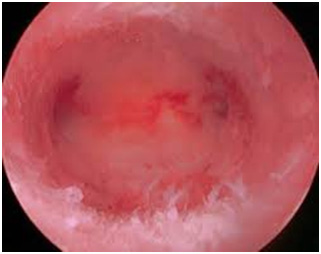
Hysteroscopy:
Hysteroscopy is used to investigate various irregular bleeding, recurring miscarriages, or infertility are examples of gynaecological issues. Also, it can be used to assess the results of specific medical procedures, like as hormone therapy or intrauterine devices (IUDs). It can be done in an office setting and often lasts less than 30 minutes.
There are different types of hysteroscopy, such as diagnostic and operative. A diagnostic hysteroscopy is used to examine the endometrial cavity for abnormalities like polyps, fibroids, or adhesions. An operative hysteroscopyis used to remove polyps or fibroids, correct abnormalities, or sterilize a woman by placing a small implant in the fallopian tubes.
The procedure is minimally invasive and generally considered safe. However, some women may experience cramping, light bleeding, or infection after hysteroscopy. Rarely, injury to the uterus or surrounding organs may occur.
Overall, hysteroscopy is a useful tool for the diagnosis and treatment of a range ofgynecological issues, and can help women achieve better reproductive health.
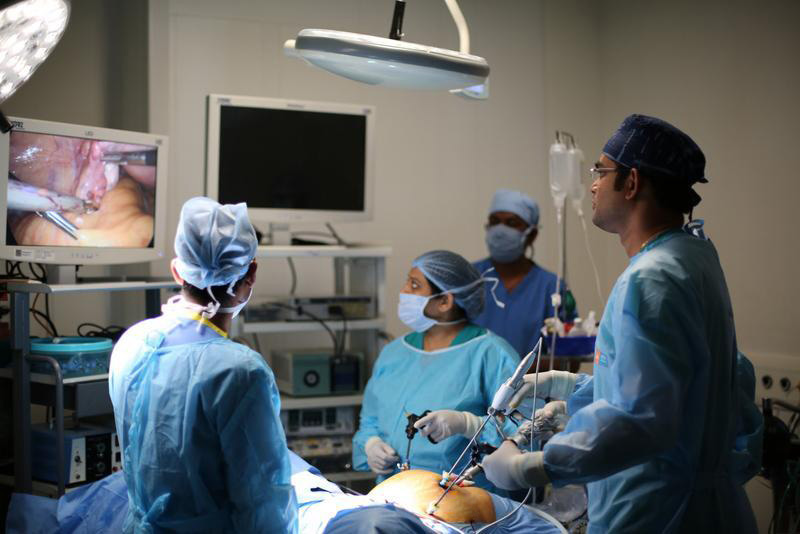
It is an invasive procedure to evaluate the pelvic cavity and organs of pelvis specifically reproductive organs in females. Small holes are made in tummy wall to insert camera and laparoscopy instruments in abdomen and required diagnosis or surgery is performed according to individual need of the patient.
Pelvic pain, blocked fallopian tubes, abnormal or excessive bleeding, pelvic or intrauterine adhesions (scar tissue), ovarian cysts, tubal disease, ectopic pregnancy, endometriosis, hydrosalpinx (fluid-filled tube), tubal ligation, and infertility are a few gynaecologic complaints for which laparoscopy is performed. In the hands of trained professionals, laparoscopy is a safe operation with some hazards, such as bleeding, infection, damage to the bladder, colon, or blood vessels; conversion to open surgery; and dangers associated with anaesthesia.
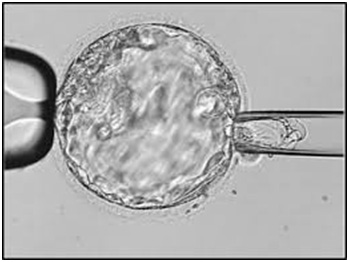
These tests identify the changes or defects in chromosomes, gene, or proteins to rule out the specific genetic disorder or help the person to determine the chance of improving it or transferring it to the next generation. With the development of new genetic tests, greater awareness, and our growing understanding of the pathophysiology of numerous diseases, the use of genetic screening has dramatically grown.
- PGT A: This test identifies numerical abnormalities of chromosomes such as Trisomy 21, 18, and 13. It also detects sex chromosome defects i.e. Turner syndrome (45 XO).
- PGT -SR: The chromosomes with balanced translocation are detected with this test.
- PGT-M: Certain monogenetic diseases are common in certain ethnicity or due to consanguineous marriage such as Sickle cell disease, Thalassemia, Cystic fibrosis, Duchene muscular dystrophy and many more. This test identifies such single gene problem in such couples and help them to prevent passing it to their children by testing the embryo for affected gene and then transferring normal embryos without genetic abnormalities.
- PGT HLA typing: Children with thalassemia major can have stem cell transplantation from the placenta of unaffected sibling who is selected by PGT HLA testing by matching the HLA both affected child and unaffected embryo.
It is an invasive procedure to evaluate the pelvic cavity and organs of pelvis specifically reproductive organs in females. Small holes are made in tummy wall to insert camera and laparoscopy instruments in abdomen and required diagnosis or surgery is performed according to individual need of the patient.
Pelvic pain, blocked fallopian tubes, abnormal or excessive bleeding, pelvic or intrauterine adhesions (scar tissue), ovarian cysts, tubal disease, ectopic pregnancy, endometriosis, hydrosalpinx (fluid-filled tube), tubal ligation, and infertility are a few gynaecologic complaints for which laparoscopy is performed. In the hands of trained professionals, laparoscopy is a safe operation with some hazards, such as bleeding, infection, damage to the bladder, colon, or blood vessels; conversion to open surgery; and dangers associated with anaesthesia.

1. What is the exact meaning of genetic testing in Abu Dhabi and why are more couples prefer to it before starting a family?
Genetic testing in Abu Dhabi involves analysing DNA from prospective parents, embryos, or both to identify inherited genetic diseases, chromosomal numerical or structural abnormalities, and single or multiple genetic mutations that could affect the health of a future child. As awareness grows and technology becomes more accessible, couples across Abu Dhabi are choosing to test early rather than later.
2. How does IVF and genetic testing in Abu Dhabi work together as a combined treatment pathway?
When IVF and genetic testing in Abu Dhabi are done together, the ivf treatment outcome becomes significantly targeted and precise. A small number of cells are biopsied and sent for chromosomal analysis. Only embryos confirmed as genetically healthy are selected for transfer decreasing the risk of miscarriage, failed implantation, and the birth of a child with a serious genetic condition.
3. For whom the genetic testing in Abu Dhabi is strongly recommended?
While genetic testing in Abu Dhabi can benefit a lot for couples with a known family history of inherited conditions such as thalassaemia, cystic fibrosis, sickle cell disease, or chromosomal translocations. It is also offered for women of advanced maternal age, couples who have experienced recurrent miscarriage or previous abnormal baby and those who have undergone multiple failed IVF cycles without a clear explanation.
4. How many types of genetic testing in Abu Dhabi are available and how do they differ from one another?
Preimplantation Genetic Testing for Aneuploidies known as PGT-A tests the embryos for abnormal chromosome numbers. PGT-M screens specific single-gene disorders carried by one or both parents. PGT-SR is offered when a couple carries a balanced chromosomal rearrangement that could be passed to offspring.
5. How does genetic testing and ivf in Abu Dhabi decrease the emotional frustration of repeated pregnancy loss?
Genetically abnormal embryos are the most common reason for miscarriage and PGTA rules out the all chromosomeal aneuploidies. By choosing to transfer euploid embryos, couple can be reassured about decreased risk of miscarriage.
6. Genetic testing in Abu Dhabi is performed only during IVF or can it be done if couple conceied naturally as well?
Genetic testing in Abu Dhabi is not exclusively tied to IVF. Preconception carrier screening can be offered to both partners through a simple blood test researching whether either carries recessive gene mutations or no. If couple has shared mutation it could result in a child with a serious inherited condition. During pregnancy, prenatal genetic testing options, such as non-invasive prenatal testing-NIPT and amniocentesis, are also available.
7. Why the role of a genetic counsellor is important in IVF and genetic testing in Abu Dhabi?
A genetic counsellor is an important part of multidisciplinary team for IVF but often overlooked when IVF and genetic testing in Abu Dhabi are undertaken together. Their role spans from helping couples understand the inheritance patterns of specific conditions, explaining the couples the genetic test results, weighing the ethical dimensions of embryo selection, and processing the emotionally difficult findings.
8. How couples can identify the quality of IVF and genetic testing in Abu Dhabi before choosing a clinic?
Not all clinics offering IVF and genetic testing in Abu Dhabi operate at the same quality and standard, and the differences are not always visible. Couples should ask specifically about the clinic’s live birth rate following genetically tested embryo transfers, not just their positive pregnancy test rate. A clinic that answers this openly, and provides documented outcome data, is the one that has earned the right to be trusted for ivf treatment.

 Give Us a Call :